

Why Recognizing Internal Anatomy (Body Maps) Can Help With Emotional Regulation
Body Awareness Starts With a Map
It turns out that being able to “place” internal body parts—to know roughly where your lungs are, where your heart beats, where your stomach sits—can make a big difference for body awareness and regulation.
Neuroscience research shows that our sense of bodily state—called interoception—is supported by internal “maps” in the brain that link physiological signals (from organs, breathing, digestion, and skin) to what we consciously experience as sensations (Critchley & Garfinkel, 2017).
When I see the word interoception, I often think of the movie Inception—I just drop “tero” in the middle. Sorry, ADHD sidetrack. But honestly, it’s not a bad analogy: interoception is like going one layer deeper into your own body’s signals.

Have you ever been in a yoga class and they have you focus on your breathing—just the in and out? I absolutely go to sleep every time I’m in a yoga class because I enter a state of relaxation that is absolutely awesome.
Part of that is because I become more aware of parts of my body that are anxious, and I’m able to calm them down so I can go into that “rest and digest” state. That same process can benefit learners when they’re struggling with emotional overwhelm, especially when it comes to mathematics.
When those internal maps are more defined—when someone has a clearer sense of what’s going on inside their body—they tend to have better self-awareness, emotional control, and self-regulation (Park & Blanke, 2019).
Even children’s songs sometimes hint at this body-mapping idea.
Knee bone’s connected to the thigh bone, the thigh bone’s connected to the knee bone, the knee bone’s connected to the…”—you know how the song goes. When we were learning that song in school, it just felt like a fun skeleton song. But I sometimes wonder if there’s some ancient (or at least intuitive) wisdom in there: when people understand the organization of their body, they may be more able to control it. That actually makes sense when you think about athletes. Athletes are finely attuned to the movements and mechanics of their bodies, which allows them to produce exceptional feats of athleticism. Because of that, they’re also often acutely aware of signals like heart rate, breathing, and fatigue. Some research suggests that physical training and sport experience are associated with differences in interoceptive processing and body awareness in athletes compared to non-athletes (Wallman-Jones et al., 2021; Seabury, 2023; Rogowska et al., 2024; Weiniger et al., 2024). In other words, the more clearly and consistently we pay attention to our internal and external body signals, the more skill we can develop in using our bodies on purpose—whether that’s on a track, in a yoga studio, or at the math table.
For learners, especially neurodivergent ones, that means: better body awareness can translate into better regulation, which makes learning easier.
Why This Matters for Neurodivergent Learners
Many neurodivergent learners (including those with ADHD, autism, anxiety, dyslexia, or dyscalculia) experience challenges with interoception. This can look like:
Not noticing stress or overwhelm until it's already “too late”
Feeling all their emotions at once, or feeling emotionally flooded
Struggling to calm down or recover from emotional spikes or shutdowns

By teaching kids some simple anatomy—even just through child-friendly diagrams—we can support these body-brain connections. It’s not about turning them into mini doctors. It’s about helping their brain know where to focus when we say things like:
“Breathe into your belly.”
“Notice your heart beating.”
“Where do you feel that worry in your body?”
When their internal map is clearer, the brain can match sensations (tight chest, fluttery stomach, heavy shoulders) to specific areas, and that gives them more leverage for self-regulation (Scalabrini et al., 2023).
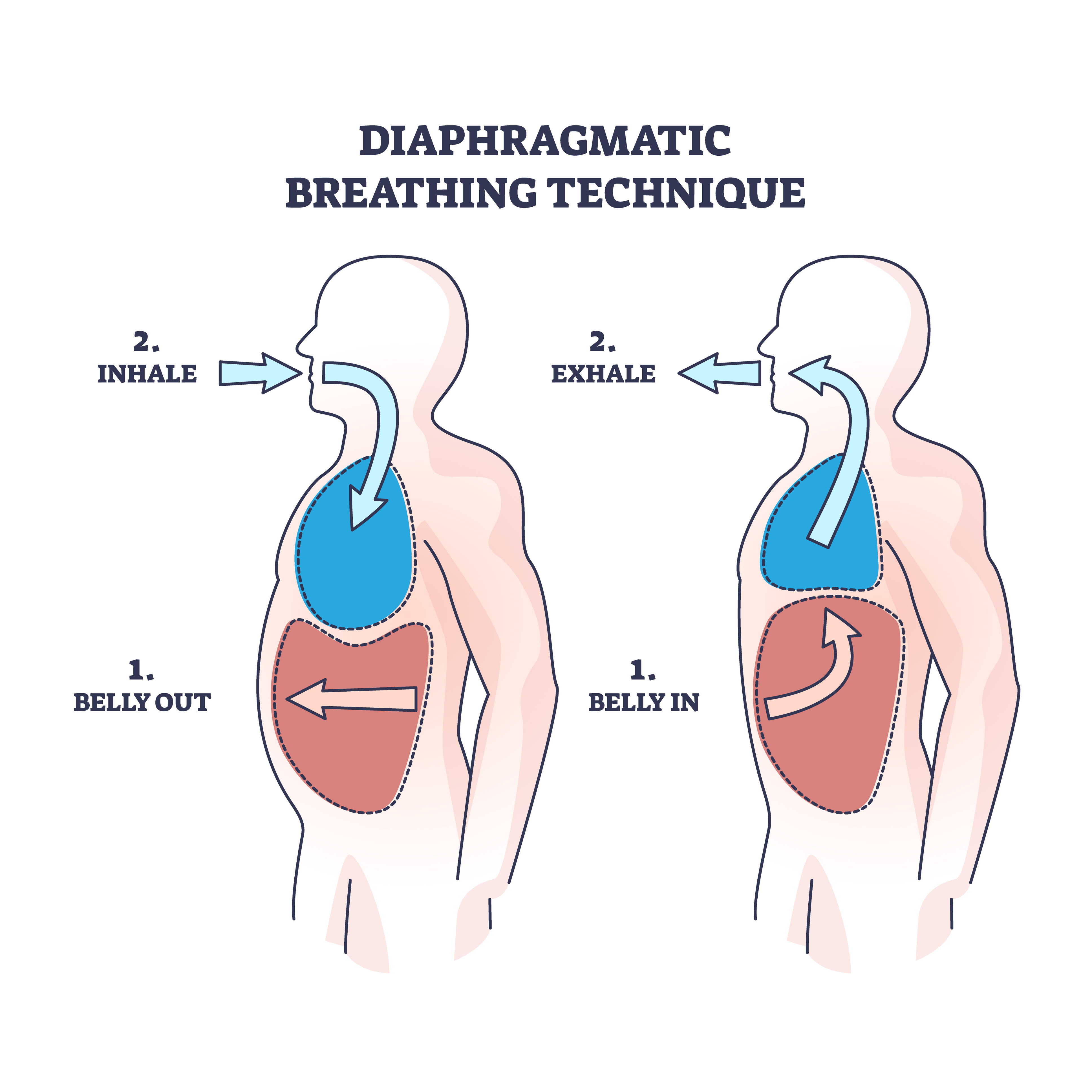
Examples of Anatomy-Aware Regulation in Action
Here’s how this looks in real life—with math homework, school stress, or everyday overwhelm.
Belly & Chest Breathing
When a child places their hand on their chest and belly and imagines where their lungs are, they’re not just “pretending.” They’re engaging internal body maps. That mental image strengthens the connection between:
The actual organ (lungs behind the ribs),
The sensations (airflow, expansion, pressure), and
The regulation response (slower breathing, calmer heart, quieter mind).
That’s one reason slow, intentional breathing can be so powerful for regulation (Zaccaro et al., 2018).

Heartbeat Awareness
If kids have seen a simple diagram of where the heart “lives”, paying attention to heartbeat or chest tightness becomes easier. They can locate that area more clearly and begin to notice:
When their heart speeds up
When their chest feels heavy or tight
When things start to calm down again
This gives them a chance to recognize rising stress before it turns into shutdown or meltdown—and use tools like slowing their breath, asking for a break, or moving their body.

“Where Do You Feel It?” Check-Ins
For older kids or teens, teaching them to notice physical signs—like a tight stomach, shallow breathing, or a heavy chest—helps them recognize stress earlier and regulate with breath or grounding exercises.
When they can connect:
“I feel it in my stomach”
“My chest feels heavy”
“My jaw feels tight”
…to a simple mental map of their insides, they’re not just naming a feeling. They’re working with their nervous system directly.
The Science of Integration: Interoception + Proprioception
Body awareness doesn’t just come from inside (interoception). It also comes from how we move and feel our body in space—called proprioception.
Interoception = What’s happening inside? (heart, lungs, gut, temperature)
Proprioception = Where is my body, and how is it moving? (joints, muscles, balance)
When learners have a clearer map of where things are inside their body, and can sense how their body is positioned or moving, their self-regulation tools become more powerful. Research suggests that integrating these signals (interoceptive + proprioceptive) is a key part of self-awareness and regulation (Scalabrini et al., 2023).
For example:
A child who knows where their lungs are and can feel their ribcage move during breathing has more “data” to work with.
A teen who can notice both “my shoulders are up by my ears” (proprioception) and “my chest feels tight” (interoception) has a clearer path to doing something about it.

💡 How to Use Anatomy Awareness at Home or in the Classroom

You don’t need a medical degree to use this. You just need simple visuals and language.
1. Use Simple Diagrams
Try a printable child-friendly diagram showing the lungs, heart, stomach, and ribs.
You can draw a basic torso outline and label: “lungs,” “heart,” “stomach/belly.”
2. Narrate With Visuals
During body scans or breathing exercises, pair words with visuals. For example:
“Feel your breath moving behind your ribs—that’s your lungs.”
“Notice if your chest (where your heart is) feels light, tight, or heavy.”
“Your stomach sits here—can you feel any butterflies or knots there?”
This helps connect sensations → locations → regulation tools.
3. Label Sensations Out Loud
Encourage kids to use language like:
“It feels tight in my belly.”
“It’s warm in my chest.”
“My shoulders feel heavy.”
This reinforces their internal body map and supports interoceptive awareness over time (Critchley & Garfinkel, 2017).
4. Add Gentle Movement
Pair simple anatomy awareness with movement:
Side bends, shoulder rolls, reaching up, gentle twists
Ask: “What changes in your chest? In your stomach? In your shoulders?”
This helps kids feel how internal organs and muscles shift with posture and movement—reinforcing the body–mind connection.
Bottom Line for Parents and Educators
You don’t have to teach full-on anatomy to help your child regulate. But a little bit of body mapping can go a long way.
By combining:
Simple diagrams
Gentle, body-based questions
Breath work
Acceptance of stimming and natural regulation strategies
…you give neurodivergent learners more tools to understand and work with their bodies, instead of feeling trapped by them.
When children know where things are on their internal map, interoception becomes more concrete. And when interoception improves, self-regulation, emotional balance, and learning all have a better chance to flourish.

Call to Action
If you’d like support helping your neurodivergent child build body awareness and confidence in learning (especially in math), I’d love to help.
I offer tutoring and coaching that:
Integrates neuroscience and body-based regulation strategies
Honors stimming and movement as valid regulation tools
Supports both academic skills and nervous-system needs
Reach out to schedule a consult, and let’s build a toolbox that actually works for your child’s brain and body.
About the Author
Sharronda Smith of Enrichology Tutoring is a neurodivergent educator who understands, from lived experience, what it’s like to wrestle with attention, overwhelm, and math anxiety. She is certified by the state of Texas in 8–12 Composite Science, 7–12 Mathematics, and EC–12 Special Education, and has taught high school science (grades 9–12) in traditional classroom settings.
Sharronda now focuses on helping neurodivergent learners—especially students with ADHD, autism, dyslexia, and dyscalculia—build both regulation skills and academic confidence. She integrates neuroscience, body awareness, and real-world problem-solving so that math and science finally feel accessible, meaningful, and less intimidating for students who think differently.
If you’re looking for a tutor who understands both the nervous system and the curriculum, Sharronda is here to help.

References
Critchley, H. D., & Garfinkel, S. N. (2017). Interoception and emotion. Current Opinion in Psychology, 17, 7–14. https://doi.org/10.1016/j.copsyc.2017.04.020 PubMed+1
Khalsa, S. S., Adolphs, R., Cameron, O. G., Critchley, H. D., Davenport, P. W., Feinstein, J. S., Feusner, J. D., Garfinkel, S. N., Lane, R. D., Mehling, W. E., Meuret, A. E., Nemeroff, C. B., Oppenheimer, S., Petzschner, F. H., Pollatos, O., Rhudy, J. L., Schramm, L. P., Simmons, W. K., Stein, M. B., & Paulus, M. P. (2018). Interoception and mental health: A roadmap. Biological Psychiatry: Cognitive Neuroscience and Neuroimaging, 3(6), 501–513. https://doi.org/10.1016/j.bpsc.2017.12.004 Wikipedia
Murphy, J., Brewer, R., Catmur, C., & Bird, G. (2017). Interoception and psychopathology: A developmental neuroscience perspective. Developmental Cognitive Neuroscience, 23, 45–56. https://doi.org/10.1016/j.dcn.2016.12.006
Parma, C., Doria, F., Zulueta, A., Lanzone, J., Boscarino, M., Giani, L., Lunetta, C., Vassallo, M., Parati, E. A., Picozzi, M., & Sattin, D. (2024). An overview of the bodily awareness representation and interoception: Insights and progress in the field of neurorehabilitation research. Brain Sciences, 14(4), 386. https://doi.org/10.3390/brainsci14040386 PubMed+1
Park, H. D., & Blanke, O. (2019). Coupling inner and outer body for self-consciousness. Trends in Cognitive Sciences, 23(5), 377–388. https://doi.org/10.1016/j.tics.2019.02.002 PubMed+1
Wallman-Jones, A., Perakakis, P., Tsakiris, M., & Schmidt, M. (2021). Physical activity and interoceptive processing: Theoretical considerations for future research. International Journal of Psychophysiology, 166, 38–49. https://doi.org/10.1016/j.ijpsycho.2021.05.002 sciencedirect.com+1
Weiniger, S. P., & Schilaty, N. D. (2024). Interoceptive posture awareness and accuracy: A novel photographic strategy towards making posture actionable. Frontiers in Neuroscience, 18, 1359594. https://doi.org/10.3389/fnins.2024.1359594 Frontiers+1
Zaccaro, A., Piarulli, A., Laurino, M., Garbella, E., Menicucci, D., Neri, B., & Gemignani, A. (2018). How breath-control can change your life: A systematic review on psycho-physiological correlates of slow breathing. Frontiers in Human Neuroscience, 12, 353. https://doi.org/10.3389/fnhum.2018.00353 Frontiers+1
Zeng, R., Shen, H., He, Y., Ge, L.-K., Zhao, D., Zhu, S., Cai, L., Wang, Y., Mehling, W. E., & Wei, G.-X. (2025). Exploring individual differences in interoception among athletes based on a three-dimensional construct of interoception. Psychophysiology, 62(1), e14766. https://doi.org/10.1111/psyp.14766 PubMed+1