

What Is Neurodivergence? A Parent’s Guide to Understanding and Supporting Your Child
What Is Neurodivergence? (For Parents)
If you’ve ever thought, “Why doesn’t my child learn like other kids?”—you’re not alone. Many parents of neurodivergent children have been there. I’ve been there too.
Neurodivergence is a term that describes how some people’s brains work differently from what’s considered “typical.” These differences aren’t bad or broken—they’re just… different. Sometimes those differences come with challenges. But they can also bring incredible strengths like creativity, laser focus, and innovative thinking (Wiley, 2024).
In this post, I want to break down what neurodivergence really means, both scientifically and practically. We’ll explore how it shows up in daily life, how to recognize it, how it impacts learning (especially in math), and most importantly, how to support your child’s growth in ways that actually work for them.

Neurodivergent ≠ Broken
Let’s start with the obvious: the school system wasn’t designed for everyone. Especially not for kids who think outside the box, struggle to sit still, or need more time to process information.
That doesn’t mean your child is broken.
It means they’re wired differently.
One of the most freeing things I’ve learned—as both a neurodivergent person and an educator—is that different does not mean defective. In fact, many of the kids who are labeled as “difficult,” “lazy,” or “unmotivated” are actually just being asked to learn in ways that don’t align with how their brains work.
What helps instead? Understanding. Support. Flexibility. And language that empowers instead of shames.

Why Language Matters (Especially for Parents)
Words carry weight.
As a parent, the words you use—and hear—can shape how you see your child and how they see themselves. That’s why it’s so important to understand the language around neurodivergence and where it comes from.
In the 1800s and early 1900s, people with intellectual or developmental disabilities were commonly labeled as “idiots,” “imbeciles,” or “cretins.” These weren’t just insults—they were actual medical terms. Someone who was emotionally or psychologically unstable might be called “insane” or a “lunatic.” Later came terms like “feeble-minded,” “backwards,” and “moron”—each used to categorize people based on perceived deficits, especially in the context of education or mental health.
Even “idiot savant” was once a clinical term used to describe individuals with so-called “islands of ability,” often in the autism community. These words lingered well into the 20th century, and some—like “moron” or “crazy”—are still thrown around today, casually but hurtfully.
That’s why the word neurodivergent matters.
It doesn’t label someone as “less than.” It doesn’t focus on deficits. Instead, it acknowledges that brains work in different ways—and that difference is not only real, it’s valid, worthy, and deserving of respect. As neuropsychologist Colby Wiley explains, neurodivergence is “not a diagnosis, but more of a care philosophy,” meant to shift the conversation from pathology to possibility (Wiley, 2024).
Understanding the language—and history—behind these words helps us create a more supportive world for our children. It reminds us that the goal isn't to “normalize” them but to nurture who they are.

The Science Behind the Word “Neurodivergent”
Neurodivergence isn’t a diagnosis—it’s a way of understanding how the brain can function differently across people. Think of it as part of the natural variation of humanity, like having different eye colors or body types. There is no single “right” way for a brain to think, learn, or behave.
Researchers estimate that 15% to 20% of the global population shows signs of neurodivergence, often due to a combination of genetics and environment (Wiley, 2024). Common types of neurodivergence include:
Autism spectrum conditions
ADHD (attention-deficit/hyperactivity disorder)
Dyslexia
Dyspraxia
Sensory processing differences
Learning disabilities
Children who are neurodivergent may process information in ways that don’t match traditional classroom expectations. That could look like difficulty focusing on things they’re not interested in—or incredible focus on things they love. It might show up as social differences, sensitivity to sound or touch, or a unique way of solving problems.
One study looked at a broad population of children referred for autism assessments and found a wide overlap in neurodivergent traits—not just those that fit into neat diagnostic boxes, but ones that showed up in varying degrees across children’s behavior, learning patterns, and emotional development (Lang et al., 2024).
Understanding neurodivergence from a scientific lens doesn’t mean trying to “fix” it. It means learning how different systems in the brain operate and figuring out what kind of support or environment helps each individual thrive.

How Neurodivergence Affects Math Learning
Math can be especially difficult—or surprisingly enjoyable—for neurodivergent learners. That’s because math often requires working memory, sustained attention, and abstract thinking, which are areas where some neurodivergent brains may struggle. For students with ADHD, for example, it may be hard to keep track of multiple steps in a problem or stay focused long enough to complete repetitive calculations. For students with autism, challenges might come from interpreting word problems or shifting strategies mid-task.
However, these same students may also have strengths in pattern recognition, spatial reasoning, and logical thinking—all of which are foundational to mathematics.
What helps is approaching math through the lens of interest and context. Instead of teaching math as a series of isolated procedures, embed it into subjects or activities your child already enjoys:
Use game scores to teach arithmetic
Measure ingredients for a recipe
Explore geometry through Minecraft or LEGO builds
Graph animal populations or sports stats
Making math visual, interactive, and personally relevant allows neurodivergent learners to form connections and stay engaged. And when learners can connect math to their real-world passions, they begin to see math not just as a school subject—but as a tool that helps them understand the world.
Embracing Neurodivergence in Your Child’s Learning

When your child is neurodivergent, it’s easy to feel pressure—to catch them up, to get them to behave, to make them “fit in.” But what if we shifted our goal from conformity to connection?
Many neurodivergent kids have spiky learning profiles. That means they may excel in one area (like visual memory or problem-solving) and struggle in another (like handwriting or time management). If you’ve ever felt like your child is a puzzle with no box lid—welcome. You’re not alone.
Start by paying attention to what lights them up. What are they drawn to? What do they talk about nonstop? What do they lose themselves in?
Those are clues.
Instead of pulling them away from those interests, lean into them. Build bridges between their passions and other subjects. For example:
If they love animals, use wildlife data to teach math.
If they’re into video games, connect their favorite characters to reading comprehension or world-building.
If they enjoy art, explore symmetry, geometry, and spatial reasoning through creative projects.
When learning feels meaningful, motivation follows.
From Awareness to Advocacy
You don’t have to be a perfect parent—you just have to be willing to learn and advocate.
Understanding that your child is neurodivergent is the first step. The next is working with schools, specialists, and even family members to help them understand, too. That might mean:
Requesting an IEP or 504 plan
Asking for sensory accommodations
Using tools like noise-canceling headphones or visual schedules
Helping your child develop language to express their needs
You’re not alone in this. The more we normalize neurodivergence, the more room we create for every child to thrive—just as they are.
About the Author
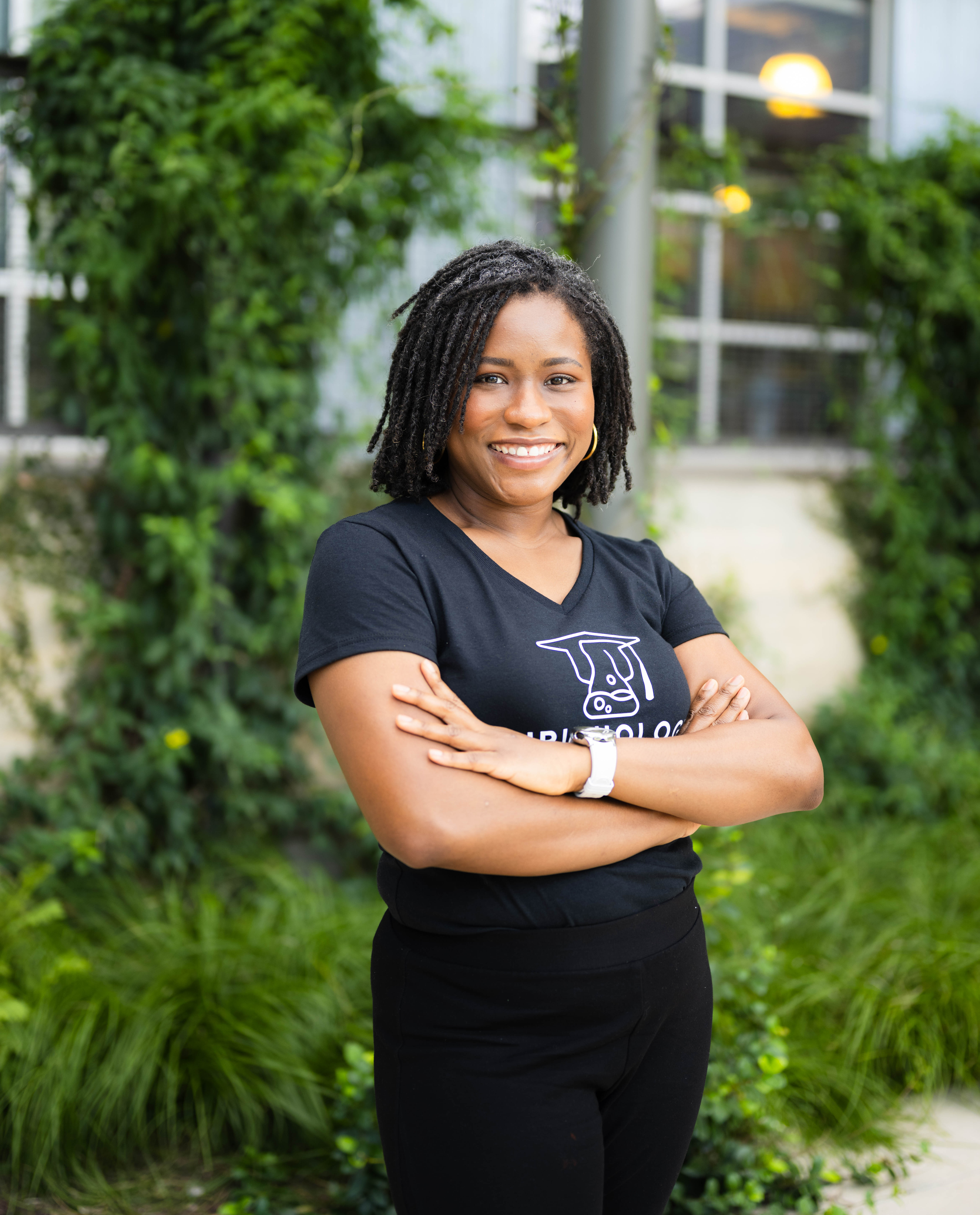
Sharronda Smith of Enrichology Tutoring is a neurodivergent educator who has experienced firsthand how powerful interest-based and inclusive learning can be—especially for learners with ADHD or autism. From a young age, she was captivated by science and the mysteries of existence, which led her to explore biology, chemistry, physics, and eventually math—once she realized math was the key to unlocking scientific understanding.
With a sibling on the autism spectrum and a deep commitment to inclusive education, Sharronda holds certifications in 7–12 mathematics, 8–12 science, and EC–12 special education. She has taught high school science and uses her interdisciplinary background to create customized strategies that resonate with neurodivergent learners.
Sharronda’s mission is to help students—and their families—understand how learning actually works for differently-wired brains. She specializes in helping students overcome math anxiety by connecting abstract concepts to their real-life passions and interests. Her approach is empathetic, research-informed, and rooted in lived experience.
Through Enrichology Tutoring, Sharronda empowers families to embrace interest-based strategies that spark motivation, build confidence, and turn learning into something joyful and meaningful.
References
Lang, J., Wylie, G., Haig, C., Gillberg, C., & Minnis, H. (2024). Towards system redesign: An exploratory analysis of neurodivergent traits in a childhood population referred for autism assessment. PLoS ONE, 19(1), 1–14. https://doi.org/10.1371/journal.pone.0296077
Wiley, C. P. (2024). Understanding neurodiversity: Exploring differences in brain function. Northwestern Medicine. https://www.nm.org/healthbeat/healthy-tips/Understanding-Neurodiversity